

Sustainability begins with understanding the current situation
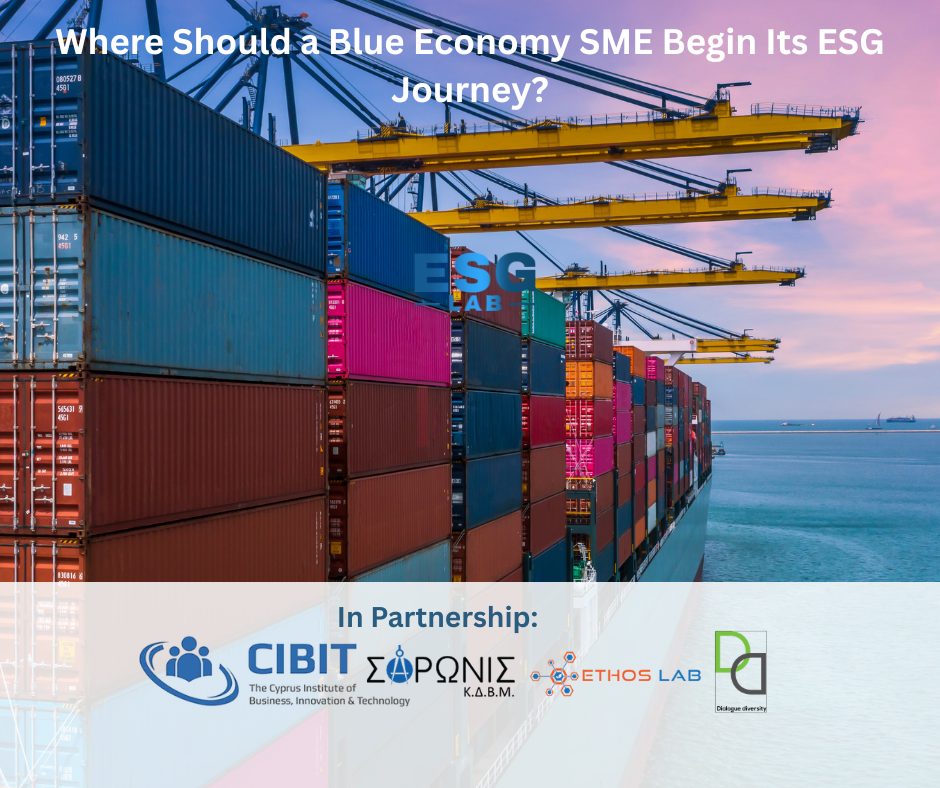
Small and medium-sized enterprises operating within the Blue Economy are at the centre of major economic, environmental and social developments.
Businesses involved in coastal tourism, maritime transport, fisheries, aquaculture and related services are increasingly expected to operate with greater responsibility, transparency and resilience.
The integration of ESG principles—Environmental, Social and Governance—may initially appear demanding. However, a business does not need to implement everything at once. The most important first step is to understand where it currently stands.
What does ESG readiness mean?
ESG readiness is not limited to whether a company has an environmental policy. It concerns the way in which the business manages its sustainability-related impacts, risks and opportunities.
The environmental pillar may include issues such as:
- Energy and water consumption
- Waste management
- Greenhouse gas emissions
- Protection of biodiversity
- Responsible use of natural resources
The social pillar may cover:
- Occupational health and safety
- Employee training and development
- Equal opportunities
- Working conditions
- Employee wellbeing
- Relationships with local communities
The governance pillar concerns:
- Accountability
- Business ethics
- Regulatory compliance
- Risk management
- Data protection
- Clear allocation of responsibilities
The first step: a structured assessment
An initial ESG assessment helps a business answer several important questions:
- Which sustainable practices are we already implementing?
- Which data are we currently monitoring?
- Which important information are we not yet collecting?
- Which ESG issues are most relevant to our activities?
- Where do environmental, social or operational risks exist?
- Which improvements can realistically be introduced?
The purpose of the assessment is not to penalise a business for actions it has not yet implemented.
Instead, it provides a reliable starting point for setting priorities and making better-informed decisions.
How can the ESG LAB Diagnostic Tool help?
The ESG LAB Diagnostic Tool offers SMEs a practical and accessible process for reviewing their current performance and level of preparedness.
The assessment examines areas such as:
- Sustainability performance
- Digital innovation
- Workforce readiness
- Skills development
- Integration of ESG principles
Through this process, a business can:
- Recognise the sustainable practices it already follows
- Identify weaknesses and opportunities for improvement
- Establish priorities
- Organise its data more effectively
- Prepare a realistic ESG action plan
The tool has an educational and guidance-oriented purpose. It does not replace a formal ESG evaluation conducted by a specialised organisation. However, it provides a valuable foundation for beginning the ESG journey.
Moving from assessment to action
Once the initial assessment has been completed, the business can select a limited number of realistic actions and assign clear responsibilities and deadlines.
For example, it may begin by:
- Recording electricity and water consumption
- Reviewing occupational health and safety procedures
- Establishing a basic code of business ethics
- Improving employee training procedures
- Developing a simple waste-management plan
- Assigning responsibility for monitoring ESG data
Meaningful ESG progress is not achieved through general statements or isolated actions. It is achieved through reliable data, consistent monitoring and continuous improvement.
A practical first step
ESG LAB supports Blue Economy SMEs through:
- Educational resources
- Digital tools
- Webinars and podcasts
- Mentoring activities
- ESG reporting guidance
- An international Community of Practice
The transition towards sustainability can begin today with one simple question:
Where does our business currently stand, and what is the next realistic step we can take?