

Introduction
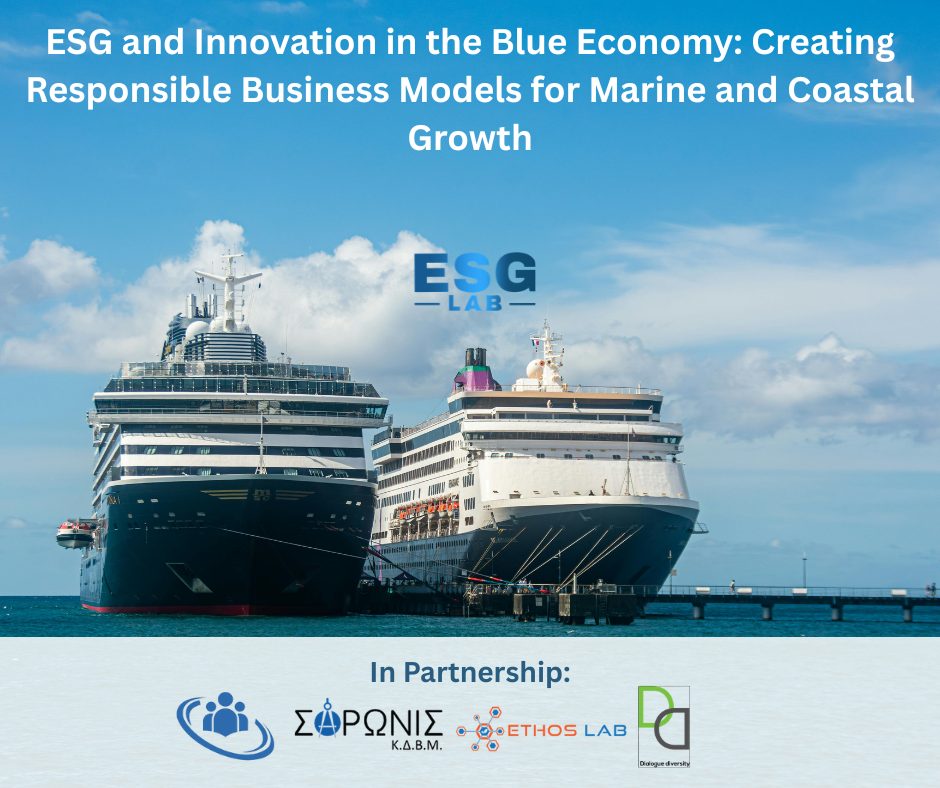
Innovation is essential for the future of the Blue Economy. As marine and coastal sectors face environmental pressures, climate risks and changing market expectations, organisations need to find new ways to create value responsibly.
ESG can support this process by helping businesses design models that are not only economically viable, but also environmentally responsible, socially inclusive and well-governed. In this way, ESG becomes more than a framework for reporting. It becomes a tool for innovation and long-term resilience.
ESG as a Guide for Responsible Innovation
Innovation in the Blue Economy can take many forms. It may involve cleaner technologies, more efficient processes, digital monitoring, circular practices, new services or improved stakeholder engagement. ESG helps organisations evaluate these innovations through a wider lens.
Environmental criteria encourage businesses to consider resource use, emissions, pollution, biodiversity and ecosystem protection. Social criteria highlight the impact on workers, communities, customers and local economies. Governance criteria ensure that decisions are transparent, ethical and accountable.
Environmental Innovation in Marine and Coastal Sectors
Environmental innovation is especially important in sectors that depend on marine and coastal ecosystems. Businesses can explore ways to reduce waste, improve energy efficiency, prevent pollution and use resources more responsibly.
For example, coastal tourism businesses can introduce practices that reduce visitor impact and protect local ecosystems. Maritime services can improve operational efficiency and reduce emissions. Aquaculture and fisheries can use better monitoring systems, traceability tools and responsible production methods.
These innovations can support both environmental protection and business resilience.
Social Innovation and Community Value
The Blue Economy is deeply connected to communities. Coastal and island regions often depend on marine-related activities for employment, identity and economic stability. For this reason, innovation should also consider social value.
Businesses can innovate by creating safer workplaces, investing in employee skills, supporting inclusive employment, collaborating with local stakeholders and designing services that benefit communities. Social innovation strengthens trust and helps ensure that Blue Economy growth supports people as well as markets.
Governance for Credible Innovation
Innovation requires trust. Without good governance, even well-intentioned initiatives may lack credibility. ESG governance helps organisations set clear responsibilities, monitor outcomes, communicate transparently and manage risks.
For SMEs, governance can begin with simple but important steps: documenting decisions, assigning responsibilities, developing basic policies and reviewing progress. These practices make innovation more structured and accountable.
Skills, Learning and Collaboration
Responsible innovation requires knowledge and collaboration. Organisations need people who can understand ESG challenges, identify opportunities and work across departments or sectors. Education and training can help teams develop these capabilities.
Digital learning platforms, mentoring and Communities of Practice can also help SMEs explore new ideas, learn from examples and collaborate with others in the Blue Economy ecosystem.
Conclusion
ESG and innovation are closely connected in the Blue Economy. ESG helps organisations understand their wider impact, while innovation helps them develop better ways to create value.
For marine and coastal sectors, this combination can support business models that are more resilient, responsible and aligned with Europe’s sustainability goals. ESG Lab contributes to this process by supporting learning, collaboration and practical ESG capacity-building for a more sustainable Blue Economy.